Spring Time Design Review for Small Business Merch
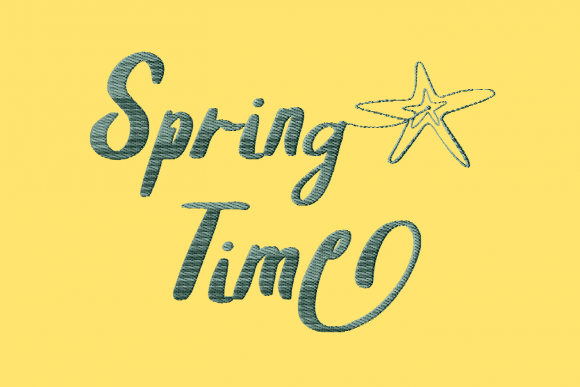
As an experienced embroidery designer who has spent years refining digital assets for commercial use, I often evaluate new files not just for their aesthetic appeal, but for their viability in a real-world business environment. Today, I am reviewing the Spring Time design, a machine embroidery file described as a casual and elegant lettering option. For small business owners, Etsy sellers, and apparel decorators looking to elevate their brand identity, the question is never simply if a design looks pretty, but if it functions effectively on merchandise like branded patches, aprons, caps, and tote bags.
The first impression of Spring Time suggests a blend of approachability and sophistication. The description highlights its dual nature as both casual and elegant, which is a rare and valuable combination for custom apparel. In the world of handmade products and boutique branding, visual consistency is key. A design that feels too stiff can alienate customers, while one that feels too playful might undermine professional credibility. This design appears to strike a balance that could work beautifully for florists, bakeries, creative studios, or local cafes wanting to project a warm, welcoming image without sacrificing quality.
Real-World Application for Branded Merchandise
When considering how Spring Time performs in actual production scenarios, its versatility stands out. Imagine a small café owner looking to create staff uniforms. Placing this design as a chest logo accent on a work shirt or apron could instantly communicate a seasonal theme or a specific brand vibe. The lettering style suggests it would hold up well on cotton blends commonly used in kitchen environments, provided the stitch density is appropriate for frequent washing.
For product designers and merch creators, this file offers excellent potential for embroidered patches. A patch featuring Spring Time could serve as a unique add-on to denim jackets, canvas tote bags, or even pet brands looking to expand their catalog. The elegance of the font implies that it could be scaled down for smaller applications, such as a subtle detail on the sleeve of a hoodie or a tag on a handmade product label. However, success here depends heavily on the execution of the digitization.
Small business owners selling on platforms like Etsy often rely on digital embroidery files to offer customization services. If Spring Time comes in multiple formats as the product description suggests, it becomes a powerful asset for creating personalized gifts. Customers appreciate the touch of a handmade product, and a well-executed lettering design adds significant perceived value to items like custom totes or event merch. It transforms a standard item into a branded experience that fosters customer trust and recognition.
Strategic Use Cases and Limitations
While the design shows promise, a critical review must address where it should be used carefully. Embroidery is a physical medium with technical constraints that differ vastly from screen printing or digital graphics. One of the primary considerations is the scale. If the design includes intricate details or tight spacing between letters, it may become illegible when reduced to a small patch size or applied to the front of a curved cap.
Curved surfaces present another challenge. When embroidering on the front of a baseball cap, the tension of the fabric changes, which can distort lettering. A design that looks balanced on a flat hoop might appear stretched or compressed once stitched onto a curve. Therefore, Spring Time might be better suited for flat areas like the pocket of a vest, the back of a tote bag, or the flat panel of a hat rather than the highly curved brim area.
Fabric texture also plays a crucial role. On textured fabrics like heavy wool or loose-weave linen, fine lines from the lettering might get lost. Conversely, on dark uniforms, the thread color contrast becomes paramount. If the design relies on thin outlines or negative space, it requires high stitch density to prevent the background fabric from showing through. Without proper stabilizer support, these delicate areas can pucker, ruining the professional finish of the finished product.
Technical Notes for Professional Execution
To ensure that Spring Time delivers the expected results, several practical steps must be taken before full-scale production. As a designer, my first recommendation is to test the design in black and white. This helps visualize the stitch coverage and ensures that the lettering remains legible regardless of the thread colors chosen. It also allows you to check if the spacing holds up when the visual weight is removed.
Reviewing the thread colors is essential for brand alignment. You must inspect the spacing between letters to ensure they do not merge during the stitching process, especially if using a high stitch density. Confirming the hoop size is another critical step; some designs require larger hoops to maintain stability, while others are optimized for compact 4x4 inch frames. Always test on the actual fabric you intend to use, as different materials react differently to needle penetration and thread tension.
Using the proper stabilizer is non-negotiable for maintaining the integrity of the design. A lightweight cut-away stabilizer is often best for delicate lettering on stretchy fabrics, while a heavier tear-away might suffice for stable wovens. Creating a printable mockup for client approval is also a smart business practice. This allows you to show customers exactly how the Spring Time design will look on their specific product before any thread is wasted.
Finally, always compare the design beside other design assets to ensure visual consistency across your brand. If you are building a collection of embroidered patches or a line of custom apparel, the style of Spring Time must harmonize with your other logos and graphics. Furthermore, confirm commercial licensing terms before using the file for mass production. Ensuring you have the right to sell products made with this digital embroidery file protects your business from legal issues.
Final Thoughts on Brand Value
In conclusion, Spring Time presents itself as a strong candidate for small business merch and branded patches. Its casual yet elegant personality makes it suitable for a wide range of industries, from floral shops to artisanal bakeries. By paying close attention to technical details like stitch density, fabric choice, and stabilization, you can transform this digital asset into a tangible symbol of quality.
For those looking to enhance their brand identity, a well-executed embroidery design does more than decorate; it communicates professionalism and care. Whether used on a cap, an apron, or a tote bag, Spring Time has the potential to become a recognizable element of your brand's visual language. Just remember to verify the specific file formats and stitch counts provided by the creator, as these details will dictate the final outcome of your commercial embroidery projects. With careful planning and testing, this design can be a valuable addition to your repertoire of design assets.